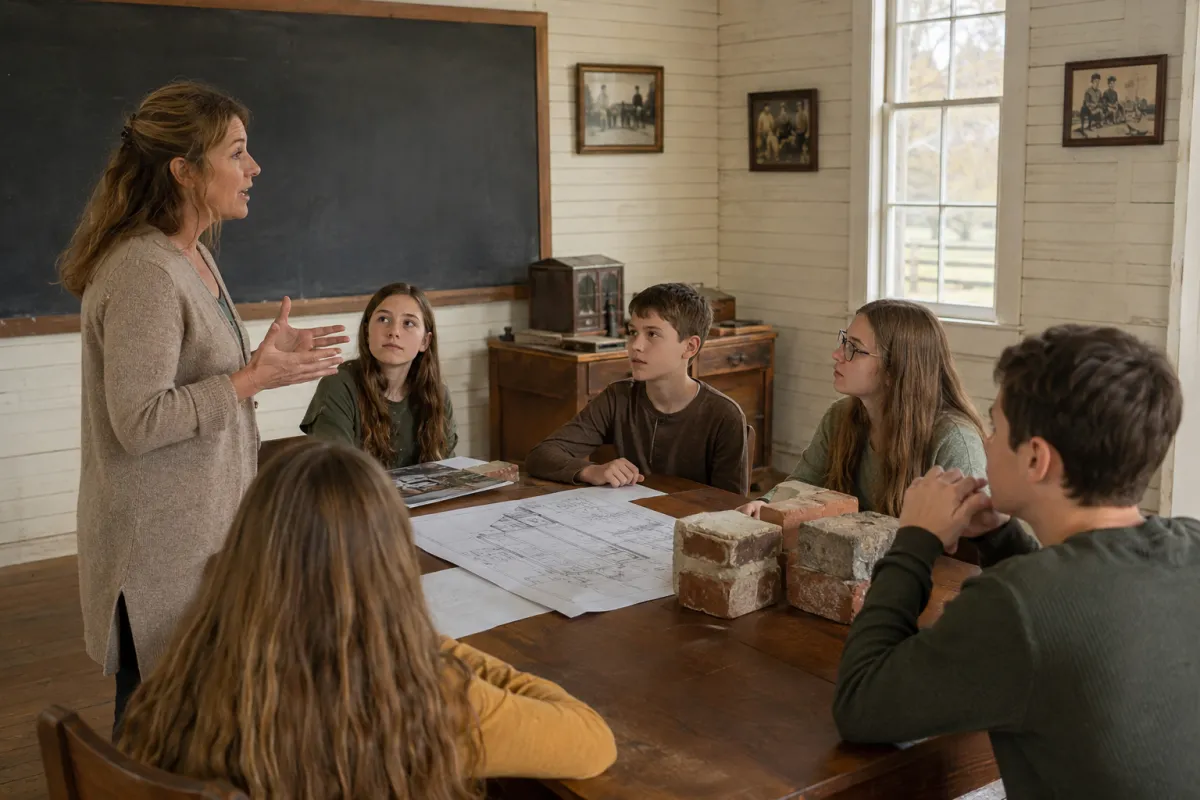
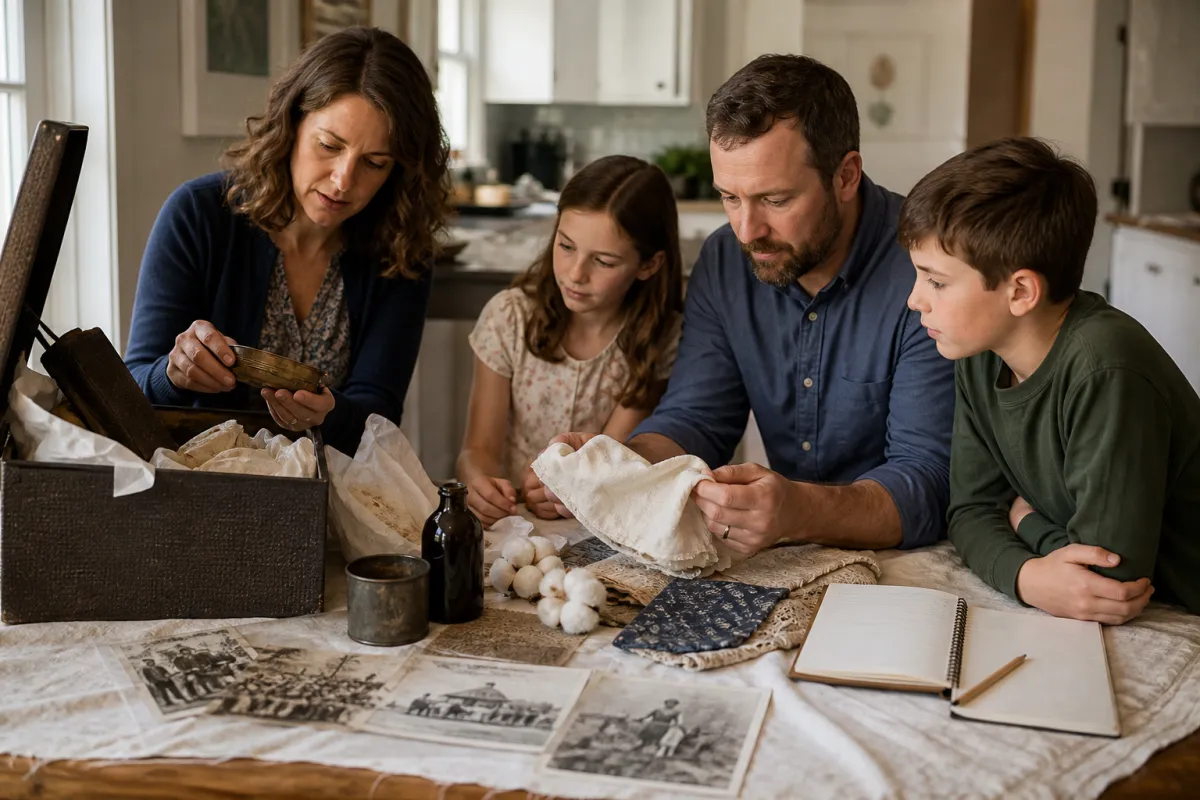
Is a historic marker the end of the story, or merely the first claim your child should investigate?
A landmark study helps a child learn that significance must be supported by records, place, and context.
A historic marker is a claim in public space. Children can learn to test that claim by comparing the sign with records, maps, photographs, and the site itself.
The answer before the details
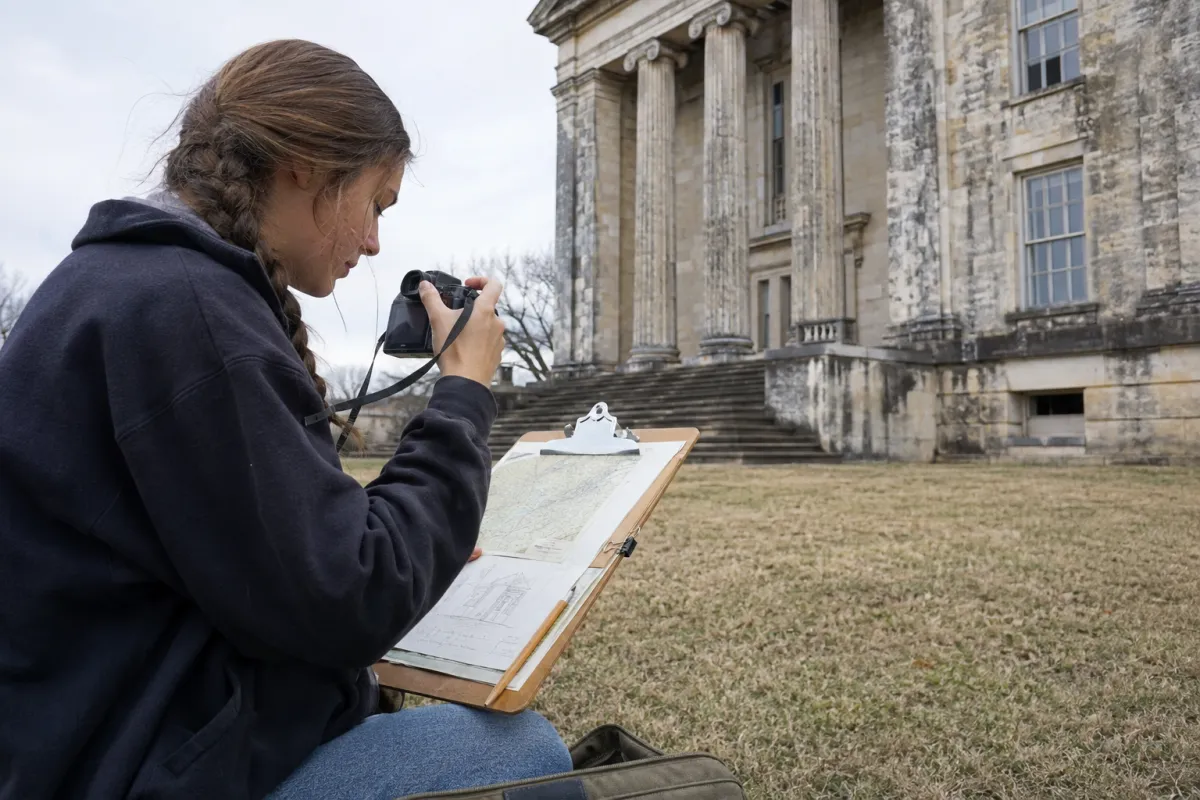
Do this first: Choose one publicly documented Arkansas property and assemble a small evidence file with a current photograph, map, official record, historical image or document, and source notes. Visit only from a lawful public location.
What the state resource gives you
Arkansas Heritage gathers educational resources from state agencies and museums across the state’s natural, cultural, artistic, and historical identity.
The Arkansas Historic Preservation Program offers teaching tools, digital resources, and outreach presentations for grades 3 through 12, including homeschool groups.
Historic Arkansas Museum describes free loan boxes and its Chapters in Arkansas History materials. Availability, pickup, shipping, scheduling, and age fit should be confirmed directly with the program.
Check before you act: Ask the responsible Arkansas Heritage program about current availability, grade fit, reservations, transport, handling, and permissions. A catalog description tells you what may be offered; staff can tell you what is actually possible now.
From resource to real learning
Write separate captions for what is visible and what a record states.
Include the creator, date, collection, and direct link for every source.
End with a claim about significance and one unanswered question.
Finish with a landmark evidence file with a claim, supporting records, a map, and one unanswered question.
The curiosity test
Who created the evidence and for whom?
What does it show directly?
Whose experience or context is missing?
A wrong first idea is useful here. Let the evidence challenge it, and make the revision part of the finished work.
Scale it without watering it down
For younger learners, separate ‘what I see’ from ‘what the label says’ with two simple columns.
For older learners, add context, provenance, and a counter-source before allowing a broad conclusion.
Keep the reasoning intact even when you reduce writing, time, distance, or the number of sources.
Important limits
Generalizing from one record to an entire group or era.
Inventing motives, dialogue, or certainty that the source does not provide.
Losing the creator, date, collection, or direct link while taking notes.
A strong finished product
The real payoff is growth in source organization, local history, and cautious claims. A strong finish is not a perfect page; it is a learner who can show how an idea changed when better evidence appeared.
Save one dated sample and a brief note about the help provided; progress is easier to see when the support is visible too.
The smallest worthwhile next step
Set out a nearby Arkansas landmark that can be visited safely and researched through official records. Write the learning question at the top of the page, complete the smallest useful version of the activity, and stop once the child can explain what the evidence supports and what remains uncertain.
Leave room for revision. A conclusion that changes with better evidence is a success, not a mistake.
Sources and further reading
 Northridge_Learning